Green Technology Revolution With AI and Renewable Energy


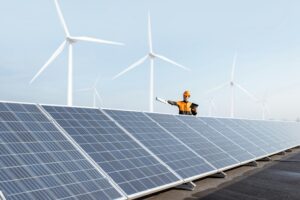
The green technology revolution is changing how the world fights climate change. Today, AI and renewable energy work together to cut waste, lower emissions, and improve energy use. As a result, homes, cities, and businesses can make smarter choices that protect the planet.
For many years, clean energy depended on better solar panels, wind farms, and batteries. Now, AI adds a new layer of power. It helps energy systems think, adapt, and respond in real time. As a result, the green technology revolution is advancing faster and delivering stronger results.
Why AI and Renewable Energy Matter Now
Climate change creates urgent problems. Heat waves, floods, wildfires, and rising seas affect communities worldwide. Therefore, countries need practical tools that reduce carbon emissions without slowing growth.
Renewable energy already plays a major role in that effort. Solar and wind power produce electricity without burning fossil fuels. However, these sources depend on the weather and timing. The sun does not always shine, and the wind does not always blow. That is where AI becomes essential.
AI studies huge amounts of data in seconds. It predicts energy demand, tracks weather patterns, and balances power flow. In other words, it helps renewable energy systems operate more quickly and accurately.
How AI Improves Clean Energy Systems
AI supports the green technology revolution in several direct ways. First, it helps energy companies predict when people will use more power. Then it matches that demand with available solar, wind, or battery storage power. This process reduces waste and improves reliability.
Next, AI improves smart grids. A smart grid can monitor power use across neighborhoods, buildings, and factories. When one area needs more electricity, the system can shift energy where it is needed most. As a result, the grid stays stable and efficient.
AI also boosts battery storage. Batteries hold extra renewable energy for later use. Yet storage works well only when systems charge and discharge at the right times. AI makes those decisions faster and better. Consequently, clean energy becomes more dependable, even during peak demand.
In addition, AI helps maintain solar panels and wind turbines. It can detect damage, dirt, or weak output before major problems appear. So, repair teams can act early, save money, and keep systems running longer.
The Green Technology Revolution in Cities and Businesses
Cities now use AI and renewable energy to build cleaner infrastructure. For example, smart buildings adjust lighting, heating, and cooling based on real use. This lowers energy bills while cutting emissions.
Public transit systems also benefit. AI can improve electric bus routes, manage charging times, and reduce traffic congestion. Meanwhile, city planners can use data to place solar systems and charging stations where they create the most value.
Businesses see similar gains. Many companies use AI to track energy waste in offices, warehouses, and supply chains. Then, they switch to cleaner systems that support long-term savings. Because energy costs matter, many leaders now view sustainability as both an environmental goal and a business strategy.
Challenges Still Need Attention
Even with strong progress, the green technology revolution faces real challenges. Some renewable systems still cost too much in certain regions. In addition, many power grids need updates before they can support advanced AI tools and clean energy at scale.
Data quality also matters. AI works best when it receives accurate, current information. If the data is weak, the system can make poor decisions. Therefore, governments and companies must invest in better digital infrastructure.
There is also a workforce issue. More engineers, data experts, and energy specialists must learn how to build and manage these systems. So, education and training will play a big role in future success.
What the Future Looks Like
The future of climate action will depend on smarter systems, not only bigger ones. AI and renewable energy can help countries move beyond old power models. Together, they can build a cleaner, faster, and more flexible energy network.
Soon, more homes may use AI to manage rooftop solar panels, batteries, and electric vehicles. At the same time, utilities may rely on predictive tools to avoid outages and lower emissions. These changes will not solve climate change overnight. Still, they can create steady progress at a global scale.
The green technology revolution is not a general idea. It is happening now. More importantly, it gives people a practical path forward. When AI and renewable energy work together, they create climate change solutions that are smart, scalable, and effective.
Green Technology Revolution
The green technology revolution shows that innovation can support both economic growth and environmental action. AI strengthens renewable energy by making systems smarter, cleaner, and more reliable. Moreover, it helps cities, businesses, and households make better energy choices every day.
Climate change demands action now. Fortunately, AI and renewable energy offer tools that can make a real difference. If leaders continue to invest in clean energy innovation, the world can reduce emissions and move toward a stronger, more sustainable future.